
Home – Future of Infrastructure
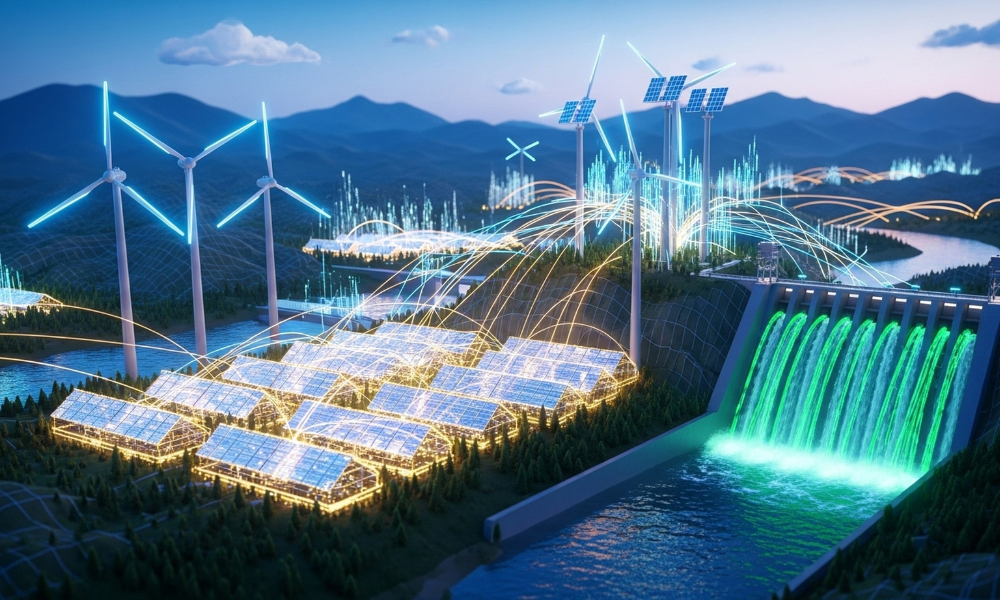
The world stands at a crossroads where physical infrastructure meets digital transformation, and I’ve witnessed firsthand how this convergence is reshaping everything we thought we knew about building our future. Gone are the days when infrastructure simply meant roads and bridges—we’re now talking about a new economic reality that demands infrastructure reimagined from the ground up, where sustainable and equitable solutions aren’t just buzzwords but fundamental requirements for survival.
Throughout history, infrastructure has been reactive rather than proactive, built to solve specific problems like sanitation, flooding, or fire without much thought given to future conditions or needs. This short-term political cycles mentality has left us with systems that quickly reach capacity and become unfit for purpose. I’ve seen cities struggle with ageing infrastructure networks that were designed decades ago, never imagining the demands of today’s connected world. The challenge isn’t just about laying concrete anymore—it’s about better planned and coordinated systems that rely on improved modelling of future demand, long-term weather patterns, and environmental changes that will define the coming decades.
What strikes me most is how the worlds of technology and infrastructure are merging at a faster rate than any point in history. This next decade will witness more technological advancement and integration than the hundred years beforehand. Capital projects are no longer predictable, engineering-driven, or labour-intensive endeavors. Instead, they’re becoming cutting-edge showcases of disruptive, breakthrough technologies that are transforming how infrastructure is built and operated, fundamentally reshaping the way the industry operates and bringing major implications for every participant in the value chain.
The shift to remote work and telemedicine has created massive implications that extend far beyond office buildings and hospitals. We’re moving from purely physical infrastructure like electricity grids to physical-digital infrastructure where broadband, self-driving cars, and smart infrastructure take center stage. Artificial intelligence, cloud computing, and cybersecurity are no longer peripheral concerns—they’re core elements reshaping infrastructure from the inside out, signaling clearly that infrastructure is going digital whether we’re ready or not.
Working with heavily funded organizations at the forefront of global research and development, I’ve seen how technical expertise in new technologies translates into real-world applications for partners and clients in both core infrastructure and non-core infrastructure sectors. The unique principles and technologies common to all sectors need to be actively embraced and applied to future infrastructure planning, not as optional upgrades but as essential foundations.
Yet here’s what keeps me up at night: as government shifts toward more digital infrastructure, cyber risk becomes an existential concern. About 76% of global infrastructure leaders expect greater focus on data security over the three years ahead. This isn’t abstract—I’ve consulted on projects where a single vulnerability could compromise entire city systems. The ability of different information technology systems and software applications to communicate, exchange data, and use the information that has been exchanged—what we call interoperability—becomes critical when everything is connected.
Here’s something that surprised me when conducting research: respondents consistently see talent shortage as a bigger obstacle to executing infrastructure projects than budget constraints or regulatory barriers. Think about that for a moment. We have the money and the legal frameworks, but we lack the people with the right skills. Investment in upskilling influences 62 per cent of employees’ decision to join, leave, or stay with an organisation, making workforce development not just an HR concern but a strategic infrastructure imperative.
Organisational capacity development is key to ensuring the transition remains just, fair, and equitable for all stakeholders. Reskilling opportunities must be prioritised to preserve jobs for those working in traditional sectors like coal mining and fossil fuel power plants. These workers will be the driving force behind industry transformation through their support for and comfort with new technologies, but only if we invest in their futures. It requires a lot of effort from all levels—from the board to operations—and they need to each have buy-in. Accepting something new means you work harder, and unlike sticking to the status quo, it demands recognizing that meaningful change comes from collective commitment.
Those in the infrastructure industry should also be trained in emerging technologies for the sector’s collective advancement. I’ve watched talented engineers struggle not because they lack intelligence but because the rapid pace of change leaves little time to adapt. We need to acknowledge this and create pathways that allow professionals to evolve alongside the technologies they’re implementing.
About 60% of respondents globally said they plan to invest in urban places for walking, cycling, socializing, and eating—a clear signal that green infrastructure is in demand. But technology adoption and hitting energy milestones can push Singapore and the region to be more climate-resilient only if concerted efforts are put in place to accelerate the process. The capacity for a socio-ecological system to absorb stresses and maintain function in the face of external stresses imposed by climate change, then adapt, reorganize, and evolve into more desirable configurations that improve sustainability—this is what true climate resilience looks like in practice.
I’ve worked on projects where we had to fundamentally rethink what “building for the environment” means. It’s not just about solar panels and wind turbines. It’s about understanding how social benefits intersect with environmental causes, how smart systems with feedback data loops provide evidence for informed decision-making, and how data-driven projections can help us anticipate rather than react to challenges. Society will increasingly demand intelligent infrastructure that makes the most of energy generation and distribution, makes buildings smarter, and keeps traffic flowing even under stress.
The capital-intensive nature of the industry makes it prudent to question whether governments alone can finance infrastructure requirements amid other essential needs like education, poverty reduction, and healthcare. Innovative ways to mobilise capital, particularly blended finance, are necessary to fill funding gaps that traditional approaches can’t address. The use of both philanthropic capital and commercial capital lowers cost and risks for each stakeholder and makes previously commercially unviable projects possible.
The inclusion of philanthropic capital—provided by charitable foundations and individuals supporting social causes and environmental causes—enables the development of more pilot projects and new technologies like green hydrogen. This includes developing the appropriate matrices to measure impact and creating frameworks that quantify social benefits accrued through blended finance and impact capital. All these would be critical in unlocking this hugely important source of capital that could move the needle in the quest for smarter, sustainable infrastructure solutions.
There’s a certainty worth emphasizing: infrastructure has a bright future with plenty of capital available for the right projects that are structured efficiently to be commercially viable. With Trillions of USD committed to Global infrastructure over the next decade from Governments, Infrastructure Funds, Sovereign Wealth funds, Multi-lateral banks, and Institutional Pension funds and Insurance funds, organizations globally that are best placed to partner and meet infrastructure needs will thrive.
Public-private partnerships can make a real difference here. Policymakers are crucial to the implementation of new technology, and through industry consultations and collective stakeholder involvements, they can establish forward-looking regulatory frameworks and design incentives like grants and concessions to catalyse innovation. The key to this multifaceted approach is enhancing collaboration between stakeholders, including government, multilaterals, academia, and the private sector.
I’ve seen this work beautifully through initiatives like the KPMG ASEAN Decarbonisation Hub, where partnered leading organisations help businesses in the region achieve decarbonisation goals. The Hub helps companies incorporate new technology for implementing innovative solutions, raise green financing by tapping alternative sources, drive credible accreditations and certifications across projects to develop trust, and leverage digital tools for cost-effective growth. As one colleague wisely noted: “Nobody has to reinvent the wheel. We should build on each other’s successes.”
Many respondents expect more work from home, more broadband, and more transportation options as permanent features of our landscape. Yet interestingly, only 4% believe that there will be fewer people living in cities. This tells us something crucial: urban centers aren’t dying; they’re transforming. The concentration of humanity continues, but the infrastructure supporting that concentration must evolve to accommodate new patterns of movement, work, and living.
Let me walk you through some specific technologies that are revolutionizing infrastructure in ways that seemed like science fiction just a decade ago.
The IoT—a fast-expanding network of digitally-connected objects including devices and vehicles embedded with sensors and intelligent computing capabilities—represents a fundamental shift. The Industrial IoT (IIoT) serves as a subset used in the manufacturing and industrial sectors. Closely linked with the rise of smart cities and grids, both the IoT and IIoT open the way to a future where a vast array of sensor data and analytics-driven intelligence is available seamlessly in real time, creating many impacts for the infrastructure sector.
These range from the rapid build-out of high-speed national communications infrastructure systems to underpin the IoT, to the need for buildings and transport hubs to be designed from ground-up to exploit IoT connectivity, intelligence, and insight. The IoT also presents major opportunities during infrastructure construction: remote real-time monitoring and control of equipment through embedded sensors, faster and smarter business intelligence for decision-making, real-time tracking of the location and safety of employees and contractors, and delivering context-specific information to workers on-site through augmented reality.
The growing use of drone technology across the world in activities such as supervising ongoing capital investment programmes, monitoring the progress of projects, managing maintenance of existing infrastructure (often combined with 3D printing), handling tasks in hazardous areas, and conducting asset inventories has become standard practice. I remember when drones were considered toys; now they’re essential tools that save time, money, and lives.
Speaking of 3D printing—this technology is now used by the majority of industrial manufacturers in developed markets, and its application in infrastructure is increasing apace. Uses ranging from the construction of 3D-printed buildings to the printing of replacement parts on-site to maintain power infrastructure more quickly and efficiently demonstrate its versatility. 3D printing could potentially save significant costs in bringing construction projects to market through shorter project times and fewer wasted resources. The technology also promises dramatic reductions in shipping costs, bringing big implications for ports and transportation infrastructure. With reduced waste during construction and the ability to melt down and recycle infrastructure, 3D-printing is ultimately set to transform how cities worldwide are planned, built, and sustained.
The conversion of data into digital form that can be processed by a computer—digitization—holds crucial importance to data processing, storage, and transmission because it allows information of all kinds in all formats to be carried with the same efficiency and also intermingled. Unlike analog data, which typically suffers some loss of quality each time it is copied or transmitted, digital data can, in theory, be propagated indefinitely with absolutely no degradation. This is why it’s a favored way of preserving information for infrastructure projects around the world.
Smart technologies that combine digital connectivity with intelligent processing are already starting to revolutionise the way societies across the world design, create, and use infrastructure. Smart cities and grids are taking a pivotal role in a vast array of infrastructure-related activities, ranging from managing carbon impacts to controlling devices and facilities in homes and business premises. This isn’t theoretical—walk through Singapore or Copenhagen and you’ll see these systems working in real-time.
Smart-maintenance gets less attention than it deserves. It’s used to reduce replacement costs and delays while providing environmentally friendly maintenance solutions for ageing infrastructure networks. This will be achieved through the development of state of the art methods to analyse and monitor existing infrastructure and make realistic scientific assessments of safety. These engineering assessments of current state are used to design remediation strategies to prolong life of existing infrastructure in a cost-effective manner with minimal environmental impact.
Autonomous cars have the potential to transform mobility, bringing huge implications for how we plan cities and design infrastructure ranging from airports to roads. Shared-car services are helping people get accustomed to buying mobility as-a-service, a fundamental shift in how we think about transportation. Many autonomous vehicles will be dedicated to specific routes while some will show up at people’s door to carry them on vacation, and others will be used by commuters to replace public mass-transit systems.
Alongside greater convenience, driverless vehicles offer the twin benefits of freeing up people’s time and attention on the move, and being able to travel closer together, thus using roads more efficiently. In the coming years, as challenges like liability issues and unclear legal frameworks and regulatory frameworks are addressed, we expect global autonomous vehicle revenues to surge with fully autonomous long-range driving at highway speeds arriving within the next decade.
Importantly, mobility in cities will need to be cross-modal, creating a need to integrate the infrastructure for autonomous cars with facilities for walking, cycling, and public transport. I’ve consulted on urban planning projects where this integration is already being designed in, and the results are stunning—cities that flow rather than congest, where movement becomes seamless regardless of whether you’re on foot, bike, or in a vehicle.
Infrastructure 3.0 brings all parts of the infrastructure puzzle together and incorporates them into a single interdependent and reliable whole, bringing the pieces of the puzzle together in ways that were previously impossible. Infrastructure 3.0 provides real-time optimization and incident handling across all domains. It allows us to adapt to the pressures of rapid urbanization, climate change, and other trends by utilizing advances in sensors, controls, and software to predict outcomes, take actions, and manage systems more effectively.
For example, in an Infrastructure 3.0 world, smart buildings and the Smart grid cooperate seamlessly to optimize energy consumption. Smart buildings take on surplus energy when it is cheap and plentiful, storing it for later and feeding back to the grid when demand is high. Traffic systems become more user-friendly, integrating all transport modes and operators so that travellers can optimally plan their journeys using real-time information—which reduces both congestion and emissions.
Command and control centres are capable of integrating transport, water, gas, and electricity networks to exercise pre-emptive actions or respond swiftly in crisis situations. I’ve witnessed these systems in action during emergencies, and the difference between siloed infrastructure and integrated Infrastructure 3.0 can literally mean the difference between controlled management and chaos.
This interconnected approach represents the culmination of everything I’ve discussed: the merging of technology with physical systems, the importance of data and intelligent processing, the need for collaboration among all stakeholders, and the imperative to build not just for today but for a future that’s arriving faster than most realize. We’re not just constructing buildings and roads anymore; we’re orchestrating complex, living systems that must breathe, adapt, and evolve alongside the communities they serve.
The infrastructure of tomorrow isn’t coming—it’s already here, being built in cities and regions where forward-thinking leaders recognize that the old playbook no longer applies. The question isn’t whether infrastructure will transform but whether we’ll transform with it, bringing the expertise, investment, and imagination required to build a world that’s not just functional but flourishing.
Duis aute irure dolor in reprehenderit in voluptate velit esse cillum dolore eu fugiat nulla pariatur.
Sign up for our monthly newsletter for the latest news & articles

Kolachi Consulting Advisors understand the issue reviews researches and provides the most relevant advise